WPS in the UAE: deadlines, SIF files and what happens when salaries are late
The short answer
The Wage Protection System (WPS) is how UAE private sector employers pay salaries: through a bank or exchange house, with a salary information file (SIF) that MOHRE can see. Under Ministerial Resolution No. 340 of 2026, in force from 1 June 2026, wages for a month are due on the 1st of the next month, and an employer is compliant when at least 85% of total wages are transferred by then. Measures against late payers start on day 2.
Free tools
Key rules under Resolution 340
Source: Ministerial Resolution No. 340 of 2026, Ministry of Human Resources and Emiratisation (MOHRE). Checked on 31 August 2026. The resolution sets the timeline and the 85% test, not fine amounts, so none is shown here.
WPS guides
- The WPS SIF File Explained, Line by LineA WPS SIF file is one SCR control line and one EDR line per employee. Here is what each field holds, with a three-person example file whose totals add up.
- What Is a WPS SIF File? How UAE Employers Create One Without RejectionsA WPS SIF file tells your bank or exchange who is paid what each month. Here is what goes into one, why the same payroll can pass at one bank and fail at another, and six rejections you can catch before the file is made.
- WPS Salary Deadline in the UAE: Due Dates, the 85% Rule and How to Stay CompliantSince 1 June 2026, UAE wages are due on the 1st of the following month, with no fifteen-day grace period, and compliance means transferring at least 85 per cent of wages due by then. Due dates, the escalation timeline and a payroll calendar that meets the 1st.
WPS: common questions
What is WPS in the UAE?
The Wage Protection System is MOHRE's electronic system for paying private sector wages. Employers pay salaries through a bank or exchange house with a salary information file, and the ministry sees each transfer, so it knows when wages are late or short.
When are salaries due under WPS in 2026?
On the first day of each Gregorian month, for the month just ended. Ministerial Resolution No. 340 of 2026 took effect on 1 June 2026. An establishment is compliant when at least 85% of total wages due are transferred by then, excluding lawful deductions.
What is a WPS SIF file?
The salary information file the bank or exchange house processes: one employer line with the establishment ID, the bank's routing code, the salary month, the number of employees and the total, then one line per employee with the person ID, routing code, IBAN, pay period, days, fixed and variable income and leave days.
What happens if salaries are paid late?
Measures escalate by day: notifications from the second day, new work permits suspended from the fifth, administrative fines and reclassification possible from the eleventh, disputes registered from the sixteenth along with permit suspension for employers of 25 or more, and from the twenty-first, precautionary attachment, travel bans and referral to the public prosecutor may apply.
How much is the fine for paying salaries late?
Resolution 340 sets the timeline and the compliance test, not the fine amounts, which are levied under separate rules and depend on how late the payment is, the size of the establishment and how many workers are affected. Confirm your own exposure with MOHRE or a legal adviser rather than a headline figure.
Which employers must pay through WPS?
All private sector establishments licensed with MOHRE, with construction, transport, storage, security, cleaning and recruitment named as higher-risk sectors. Narrow exemptions cover staff paid outside the UAE with approval, workers under liberty restrictions, and mission permits of three months or less.
Does Wurxa send the salary file to the bank?
No. Wurxa Payroll builds the SIF file from the month's payroll in your bank or exchange house's layout and checks every IBAN and routing code first; you upload it to your bank or exchange house as you do today. Wurxa never moves money.
A checked SIF file, well before the 1st.
Wurxa Payroll works out the month from salary items and recorded attendance, waits for the owner's approval, then builds the WPS file in your bank or exchange house's layout with every IBAN and routing code checked first.
Free for up to 5 employees. Try every feature for 14 days, no credit card.
One workspace, four products
Wurxa Workforce
Attendance, people, leave and payroll for teams working across sites.
Explore Wurxa Workforce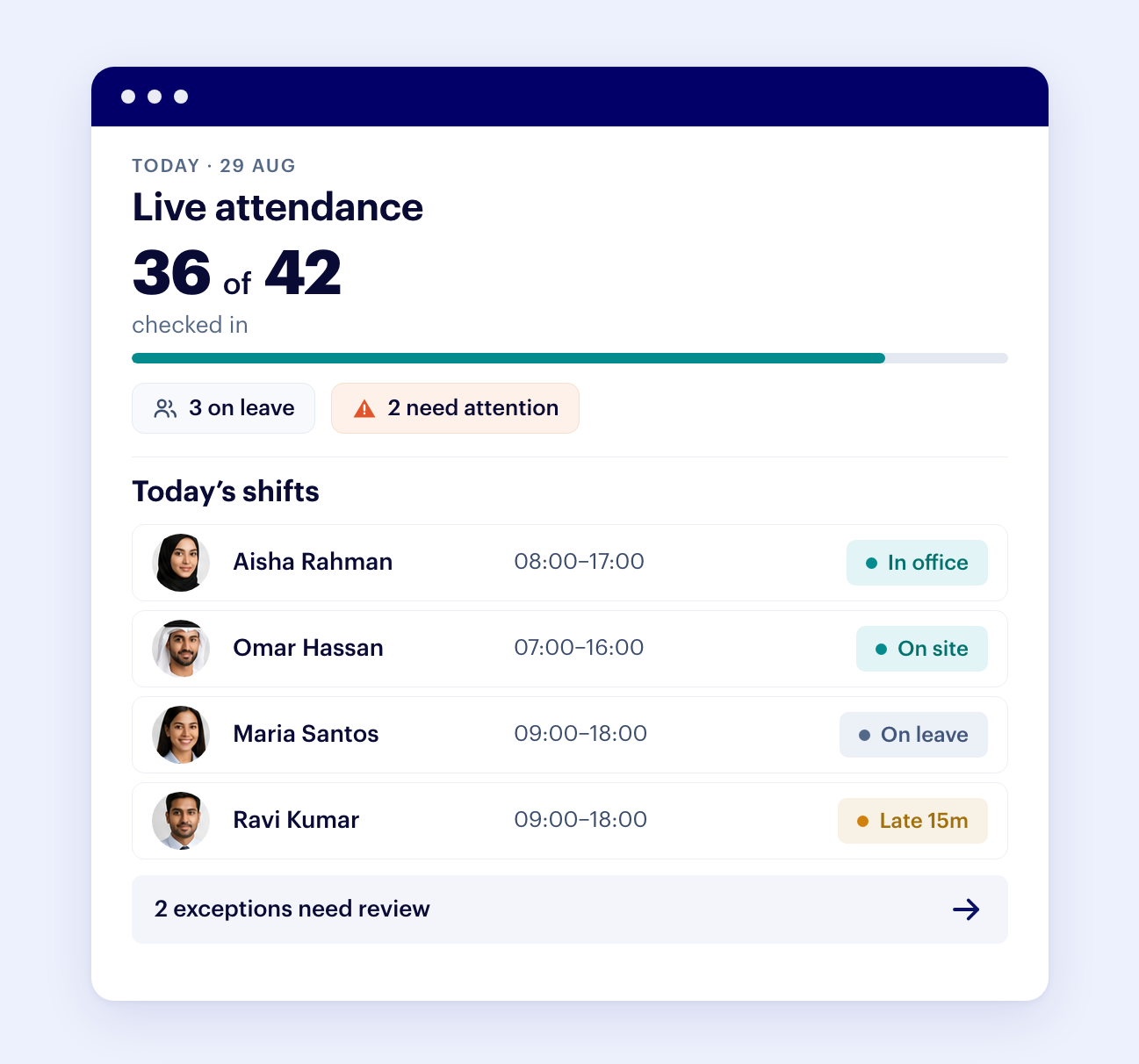
Wurxa PRO
Cases, customers, renewals and billing for typing centres and PRO offices.
Explore Wurxa PRO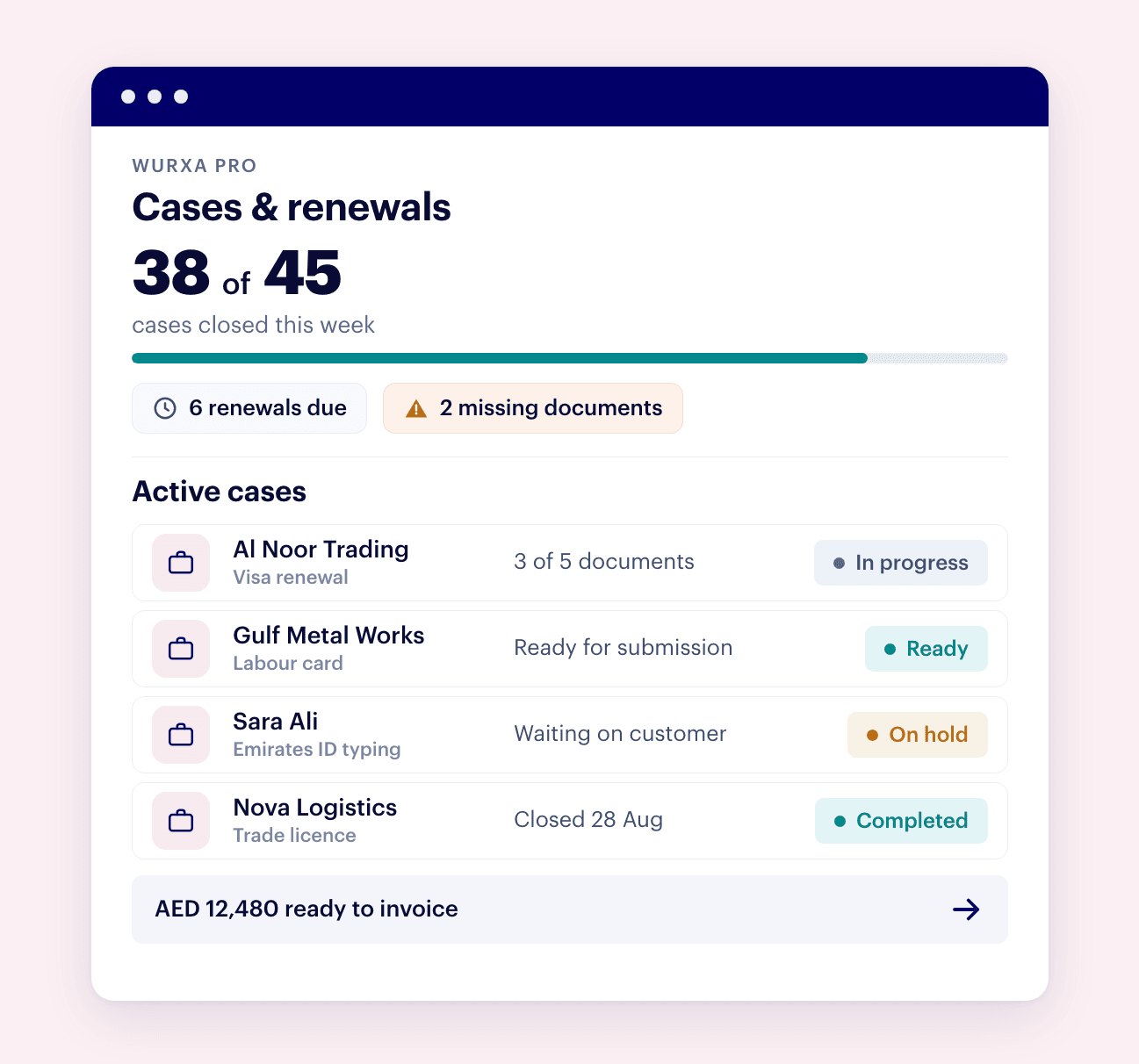
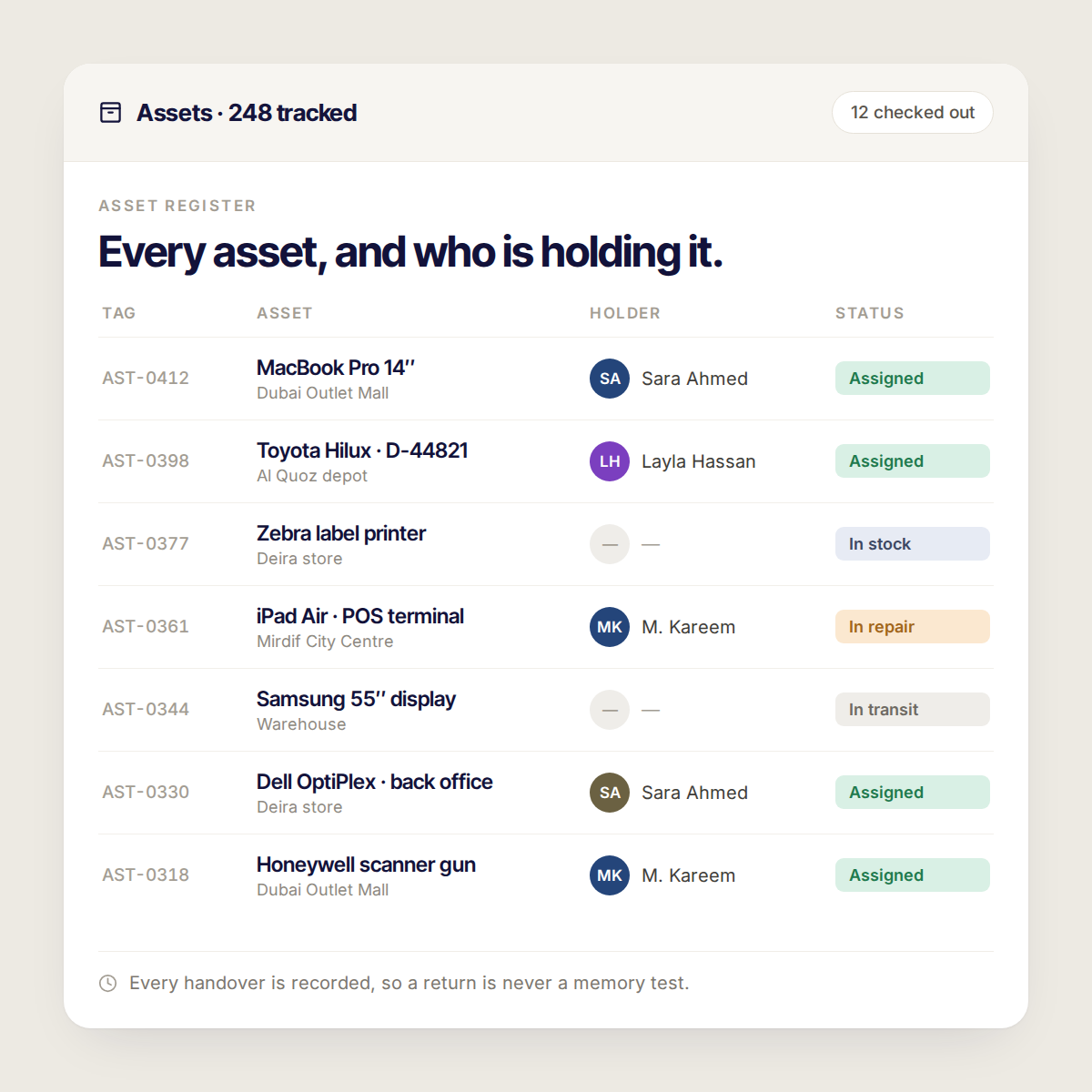
Wurxa Assets
Free asset management for equipment, vehicles and IT kit, with custody trails, QR labels and audits.
Explore Wurxa Assets