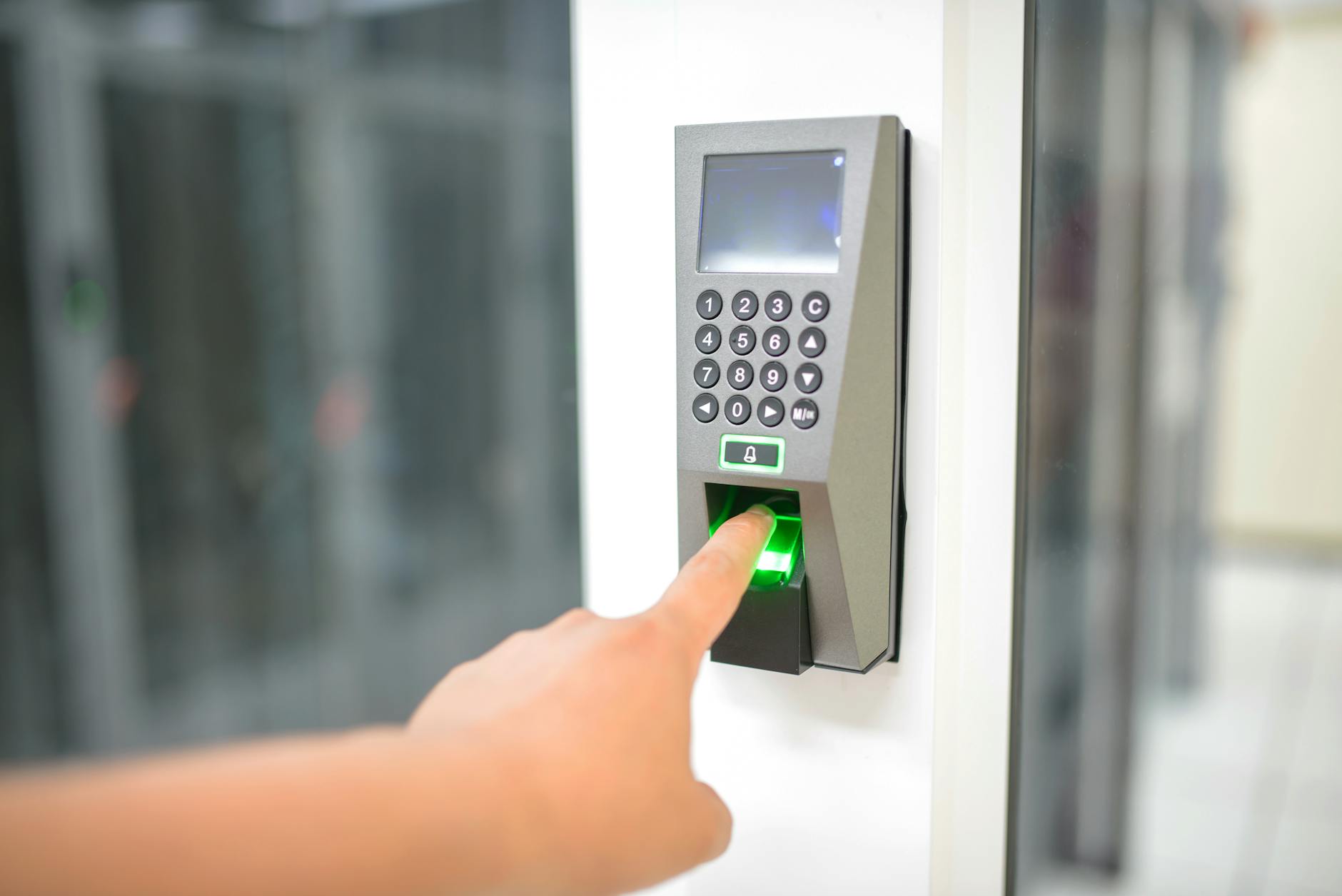
A biometric terminal does not need your server to do its job. It matches the
finger or the face locally, writes the punch to its own memory, and delivers it
when it can. The network carries the record afterwards; it is not part of
recording it.
That distinction is why an attendance system can survive an outage without losing
anything, and it is worth understanding in detail, because the same architecture
explains what does go wrong.
What one day of real traffic looks like
From our production web server log, a single day, 31 August 2026:
154,195 requests, 96.1 per cent of everything the server handled that day, and 89
errors.
Every one of those 89 errors landed on getrequest or ping. **Zero landed on
cdata**, which is the endpoint that carries punches.
That is not luck. It is what the traffic shape makes almost inevitable, and the
reason is the ratio in the first column.
Why the punch endpoint is the safe one
getrequest is the terminal asking "do you have anything for me?". It runs
constantly, from every device, on a short interval. 153,575 times in a day. It
carries no data and nothing depends on any individual call succeeding, because
another one follows seconds later.
cdata is the terminal saying "here is what happened". It runs only when there is
something to deliver. 320 times in the same day.
So the endpoint that matters is used 480 times less often than the one that does
not, which means a brief server interruption is overwhelmingly likely to land on
a poll. The 88 failures we recorded represent 88 command checks that happened a
few seconds later than intended, and no user-visible consequence whatsoever.
The failures also cluster: 41 of the 89 fell in a single hour, and the rest
spread across three others. That is the signature of short interruptions rather
than a persistent fault, which is exactly what a restart looks like from the
device's side.
The acknowledgement is the whole design
Even when a punch upload does fail, the record survives, and the mechanism is
simpler than people expect.
The terminal sends its batch and waits for a reply. Our server responds with a
count of what it stored. Only on receiving that acknowledgement does the terminal
consider those records delivered and free them from its memory.
No acknowledgement, no deletion. A connection that times out, a server that is
restarting, a 502 from a proxy: all of them leave the terminal holding exactly
what it was holding before, and it tries again on its next cycle.
This is why "will a deploy lose punches?" has a boring answer. During a restart
the terminal cannot deliver, so it does not delete, so it delivers afterwards
instead. The only thing that changes is when the record arrives, and every record
carries the time it actually happened rather than the time it was received.
Why it works from sites you do not control
The connection is outbound. The terminal dials the server, not the reverse.
That single property removes most of the infrastructure that attendance
deployments used to require. No fixed IP at the site. No inbound port opened on
somebody's router. No VPN between head office and a shop unit whose network is
managed by the landlord. The terminal needs to reach one address on the public
internet, which is a thing almost every connection can already do.
It also means a site with a weak connection degrades gracefully rather than
failing. Records queue locally and drain when the link is available. In practice
we see the effect of this in the delivery latency rather than in loss: promptly
delivered punches arrive within about two hours of occurring, and the ones that
take longer are the ones behind a poor link.
Where data genuinely can be lost
Three ways, none of them a network outage.
Somebody clears the device. A terminal holding undelivered records, factory
reset or cleared during troubleshooting, loses them permanently. This is the most
common real cause and it usually happens while somebody is trying to fix
something else.
The device is replaced while holding a queue. Same problem with better
intentions. The old unit comes off the wall with records still in it.
The queue overflows. Terminals store tens of thousands of records, so this
takes weeks of disconnection for most sites. It is real but it is the least
likely of the three.
Every one of these is a human action during an outage rather than the outage
itself. Which suggests the correct operational rule: **when a terminal is
offline, restore the connection before you touch the device.** Let it drain
first. Whatever you were going to reset will still be resettable in ten minutes,
and the records will not.
The trade-off nobody mentions
Push architecture buys the resilience described above and costs something in
return, and it is worth stating because the cost is usually discovered rather
than chosen.
You cannot ask a terminal anything. The server never initiates. If you want
to know whether a device is holding undelivered records, you wait until it next
speaks to you. Everything you know about the fleet is what it last told you,
which is why the status field is a memory rather than a measurement.
Commands are answers to a question. When you want a device to do something,
enrol a user, delete a template, reboot, you cannot send it. You queue it and
wait for the device to ask. That is what those 153,575 polls are for: they exist
so the server has an opportunity to reply. It is a slightly odd inversion, and it
is why device commands feel slower than they should.
The serial number is the identity. There is no key exchange, no certificate,
nothing but a string in a query parameter. That is why pushes from unregistered
serials have to be refused: the serial is a name, not a credential, and anything
that treats it as proof is treating a name as proof.
Given the choice again we would take the same trade. Reaching outward from the
site is what makes the deployment possible at all, and a protocol that never
loses a record while occasionally being slow to answer a question is the right
way round for attendance. But a system built on it should be honest that fleet
visibility is inherently lagging, rather than presenting a cached state as a live
one.
What to check in your own system
Does the endpoint that receives punches acknowledge with a count? A generic
success reply is weaker: it tells the device to delete without telling you how
much was stored, and the two can disagree.
Do your error logs separate the polling endpoint from the upload endpoint? If
they are aggregated, a real ingestion failure is hidden inside a much larger
volume of harmless retries. Ours would have been: 89 errors in 154,195 requests
is noise until you split it by endpoint, at which point it is a clean result.
**Does every punch carry the time it happened, separately from the time it
arrived?** Without that, a delayed batch after an outage lands on the wrong day
and the outage causes a data problem after all.
Put the workflow into practice.
Start with every Wurxa feature for 14 days. No credit card required.